Our Temple
Lord Venkateswara
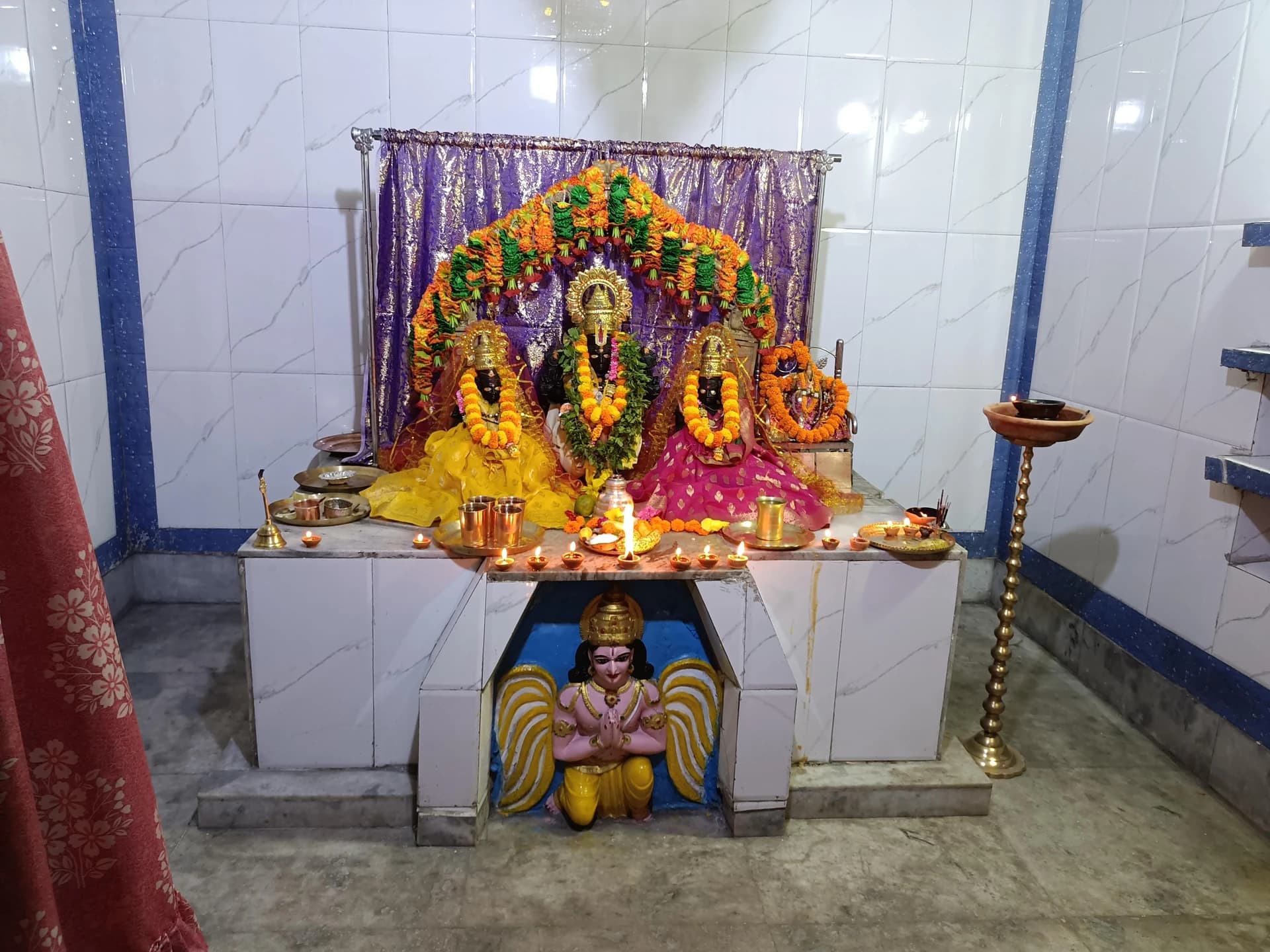
The principal deity of Sri Sri Venkateswara Temple at Rail Bazaar, Alipurduar Junction. The sacred story is told here for devotees in North Bengal who wish to know the Lord of the Seven Hills.
The accounts below belong to sacred Vaishnava tradition. They are offered for devotion and understanding, not as independently verified historical fact.
The Lord
Who Lord Venkateswara is
Lord Venkateswara is worshipped as a manifestation of Vishnu — the preserver in the Hindu trinity — who, according to sacred tradition, took his dwelling on the hills of Tirumala for the welfare of devotees in this age. He is also called Srinivasa, Balaji and Venkatachalapati. Devotees approach him as a Lord who hears prayer, receives vows and grants refuge.
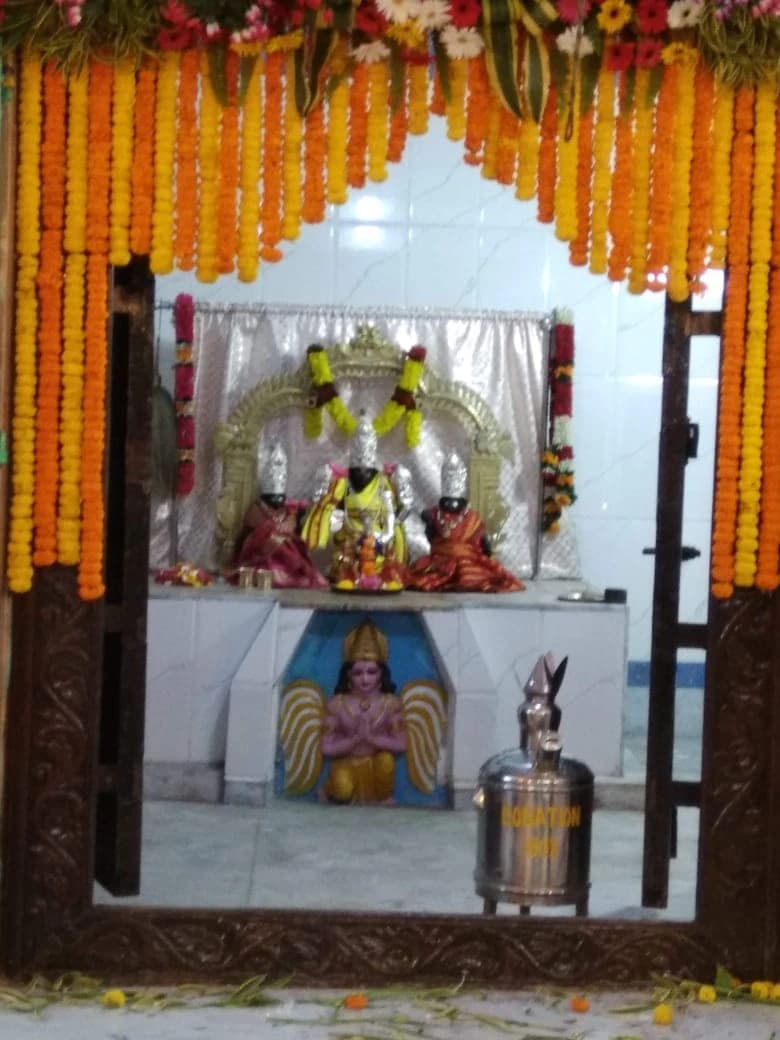
At Rail Bazaar, Alipurduar Junction, the principal deity of this temple is Sri Venkateswara Swamy. Members of the local railway community of Alipurduar Junction raised this shrine so that families living far from Tirumala might still stand before the Lord in whose name they prayed.
Tirumala
Vishnu’s manifestation at Tirumala
Sacred tradition holds that Vishnu manifested as Srinivasa on the seven hills of Tirumala, in present-day Andhra Pradesh. The hills themselves are remembered as a dwelling of the Lord. Pilgrims speak of Venkateswara as the deity of Kali Yuga — the age in which sincere prayer, offered with faith, is received with particular compassion.
The Alipurduar temple does not claim the antiquity of Tirumala. It is a home of worship raised in 1977 so that this same Lord might be honoured in North Bengal.
Sacred tradition
The story of Bhrigu
One well-known tradition tells of the sage Bhrigu, who set out to determine which of the Trimurti was most worthy of worship. At Vaikuntha he is said to have struck Vishnu on the chest. Vishnu, instead of answering with anger, received the sage with humility and even tended the foot that had struck him.
Lakshmi, who dwells on Vishnu’s chest, is remembered as wounded by this insult. The tale is told not as a chronicle of dates, but as a teaching about forbearance, honour and the cost of wounded love.
Sacred tradition
Lakshmi leaving Vaikuntha
In the same stream of tradition, Lakshmi leaves Vaikuntha after the insult offered in her presence. The world is described as dimmed by her departure. Vishnu, seeking his consort and the restoration of grace upon the earth, is said to have left his heavenly abode.
Sacred tradition
Srinivasa’s arrival on Earth
Tradition then places Srinivasa upon the earth, wandering and later dwelling on the hills of Venkata. He is received by the people of that region, lives among them, and awaits reunion with Lakshmi. Devotees remember this descent as the Lord’s willingness to remain accessible — not distant in Vaikuntha, but present on a hill that pilgrims can climb.
Sacred tradition
His marriage to Padmavati
Padmavati, remembered as an incarnation of Lakshmi, is the daughter of a royal house in the traditions of Tirumala. Srinivasa seeks her hand. Their marriage is celebrated in song, ritual and the memory of countless households. For devotees, the union restores what was broken: Vishnu and Lakshmi together again, now in a form that the world can approach.
Sacred tradition
Kubera’s loan and the tradition of offerings
Another beloved tradition says that Srinivasa borrowed from Kubera, the treasurer of the gods, to meet the expenses of the wedding. The debt is described as still being repaid through the offerings of devotees. This is why gifts of gratitude — including vowed offerings — are so closely associated with Venkateswara worship.
On this website, an E-Seva request is a request to the temple, not an online payment and not a claim that a cosmic debt has been settled. Offerings are received only through the authorised temple administration.
Sacred marks
Meaning of the sacred Namam
The namam worn on the forehead in the Sri Vaishnava manner is a sign of belonging to Vishnu. The white U-shaped mark is associated with the Lord’s feet; the red or yellow central line is associated with Lakshmi. Together they remind the devotee that refuge is taken at the Lord’s feet, in the presence of the Mother.
Sacred marks
Shankha and Chakra
The shankha (conch) and chakra (discus) are among Vishnu’s principal emblems. The conch is associated with the sacred sound that calls creation to order; the discus with the Lord’s power to protect dharma and cut through ignorance. In temple art they appear beside Venkateswara as signs that the same Vishnu who preserves the worlds is present in the sanctum.
Devotion
Why devotees pray to Venkateswara
Devotees pray to Venkateswara for refuge, for the strength to keep a vow, for the welfare of family, and for a quiet heart. Many come with gratitude after a difficulty has passed; many come simply because this Lord has been the God of their household for generations. Local railway families of Alipurduar Junction and their neighbours have kept that relationship alive since 1977.
A first prayer
A simple prayer for first-time devotees
Om Namo Venkatesaya
Lord Venkateswara, you who dwell on the hills and also in this small shrine beside the railway lines, receive my prayer. Grant me a sincere heart, protect my family, and let me remember you with gratitude.
This temple
Worship at Rail Bazaar, Alipurduar
Sri Sri Venkateswara Temple was established on 30 October 1977 through the collective efforts of members of the local railway community of Alipurduar Junction. The names of the founding members are recorded on the foundation plaque and listed on the Temple History page.