Our Temple
Temple History
Built by the local railway community of Alipurduar Junction. Sustained by generations of devotion.
Foundation plaque
1977
Established 30 October 1977
Sri Sri Venkateswara Temple, Rail Bazaar, Alipurduar Junction. The Golden Jubilee falls in 2027.
The Beginning
The Beginning
Sri Sri Venkateswara Temple at Rail Bazaar, Alipurduar Junction, was established on 30 October 1977.
Among devotees in Alipurduar and across North Bengal, this South Indian shrine is also known as the Balaji Temple or Balaji Mandir at Rail Bazaar, beside Alipurduar Junction.
The date comes from the foundation plaque at the temple. It is the public record of beginning used on this website. A separate consecration date is not stated here.
Visit Balaji Temple at Alipurduar JunctionRead the heritage recordThe Dooars
A Sacred Home in the Lap of the Dooars
Sri Sri Venkateswara Temple at Rail Bazaar, Alipurduar Junction, was established on 30 October 1977 through the collective devotion and sacrifice of members of the local railway community of Alipurduar Junction.
These were ordinary railway employees and their families—people of modest means but extraordinary faith. Far from their ancestral homes, they contributed what they could, worked together and created a sacred home for Lord Venkateswara in North Bengal. The temple was not raised through institutional sponsorship or great wealth. It was built through personal sacrifice, voluntary service and an abiding belief in the grace of the Lord.
You enter as a visitor. You become part of a fifty-year journey of faith.
In the Lap of Nature
The temple stands in the Dooars, the beautiful sub-Himalayan landscape at the foothills of Bhutan. The word Dooars means “doors” or “gateways,” recalling the historic passages that connected the plains of India with Bhutan and the eastern Himalayas.
Alipurduar is surrounded by a landscape of dense forests, tea gardens, green plains, hill-fed rivers and streams. The Kaljani River flows through Alipurduar, while the wider district is nourished by the Torsa, Raidak, Jayanti and Sankosh rivers. Nearby lie the forests and wildlife landscapes of Buxa, Jayanti, Rajabhatkhawa, Jaldapara and Chilapata. The Bhutan hills rise to the north, giving this region a character that is peaceful, fertile and profoundly connected with nature.
Amid this abundance of forests, rivers and distant hills, the temple offers devotees a place of stillness—a spiritual sanctuary in the lap of nature. The sound of prayer here belongs naturally to the landscape: to monsoon rain, rustling trees, flowing rivers and the railway lines that have carried generations of people through Alipurduar.
A Temple at a Meeting Place of Regions
Alipurduar Junction, widely known by the railway code APDJ, occupies an important place in the geography of North Bengal. It serves communities and travellers connected with Alipurduar, Cooch Behar, Jalpaiguri, Assam and the wider Northeast. Bhutan lies directly to the north of Alipurduar district, while the Siliguri corridor connects the Dooars with Darjeeling, Sikkim and Nepal. Devotees travelling through Alipurduar Junction often look for this South Indian shrine as the Balaji Temple in Alipurduar.
The temple therefore stands at a meeting place of landscapes, languages and cultures. Bengali, Telugu, Hindi, Assamese, Nepali and other linguistic communities have passed through or made their homes in this region. The Venkateswara Temple Rail Bazaar became a spiritual bridge among them—a South Indian tradition planted with love in the soil of North Bengal.
Fifty Years of Living Faith
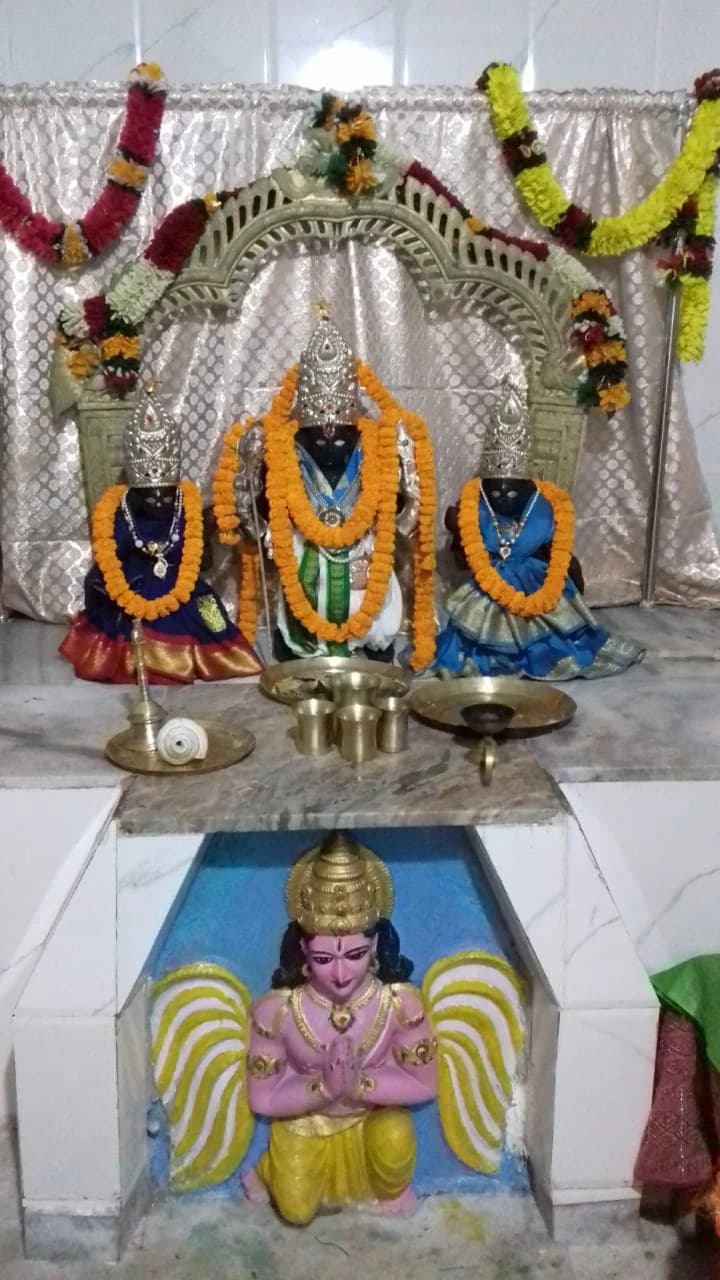
What began in 1977 as the shared dream of common railway employees has endured through generations. Families prayed here, children grew up here, festivals brought communities together, and travellers found a familiar sacred presence beside the railway junction.
Today, Sri Venkateswara Swamy Temple remains a living house of worship at Rail Bazaar. Rooted in the devotion of the local railway community of Alipurduar Junction and embraced by devotees across North Bengal, it stands as proof that a temple is not created by stone alone. It is created by faith, sacrifice, memory and the hands of people who believe that the Divine should have a home among them.
AddressRail Bazaar, Alipurduar Junction, Alipurduar, West Bengal, India
Community
A Temple Built by the Local Railway Community of Alipurduar Junction
Its story is inseparable from the local railway community of Alipurduar Junction. Employees and families who had travelled to North Bengal from different parts of India came together through devotion to Lord Venkateswara. Through their contributions, service and collective determination, they created a sacred home beside the railway lines.
Sri Venkateswara Swamy Temple was established through the voluntary devotion and collective efforts of members of the local railway community living and working around Alipurduar Junction. This description refers to the local community connected with the railway settlement; it does not imply institutional sponsorship, ownership or funding by Indian Railways.
The temple became more than a place of worship. It offered local railway families of Alipurduar Junction a sense of continuity, brought people of different languages together and introduced generations of devotees in North Bengal to the worship of Lord Venkateswara.
They did not merely construct a building. They created a sacred inheritance.
The inscription
Establishment in 1977
The plaque is shown in its original portrait orientation so that every name remains visible.
Names on this page have been transcribed from the original inscription. Some spellings are being cross-checked with temple records and founding families.
The inscription
Founding Members
The following names are transcribed from the foundation plaque installed at the temple. Spellings are reproduced as they appear on the inscription and will be cross-checked against surviving temple records and family testimonies.
Names on this page have been transcribed from the original inscription. Some spellings are being cross-checked with temple records and founding families.
P. S. Rao
B. M. M. Rao
B. S. S. Rao
N. Tirupathia
Chaka Venkata Chalam
Khokan Mukherjee
Goda Sambasiva Rao
Pativada Appannya
Maddu Naidu
Penta Jagannadham
Vasanta Tata Rao
Dummisi Sanyasi
Kankanala Suribabu
Vankara Demudu
Vechalapu Pentaiyya
Teppala Jaga Rao
Saripelli Joga Rao
Siyyadri Appa Rao–I
Gali Narayana
Mamidi Musalayya
Dummisi Demudu
Vasanta Demudu–II
Kamakula Laxman Rao
Kudara Polipelli
Metturi Bairagi
Kakara Chilku
The inscription
Co-Founding Members
Kapu Naidu
Pativada Dalaiyya
Vechalapu Somaraju
Juttada Simachalam
Moyya Kamraju
Remembered with caution
Sri Murali Mohan Banda
Sri Murali Mohan Banda served the Indian Railways in Alipurduar, participated in the temple’s construction and later served as a trustee. His recollections form an important part of the history now being documented.
1977–2027
Fifty Years of Worship and Community
As the temple approaches its Golden Jubilee in 2027, we honour those whose faith and labour made this sacred institution possible. The commemorative year follows the recorded establishment of 30 October 1977.
The archive
Preserving the Temple’s Memories
The foundation plaque preserves the names of those who created the temple, but many personal stories remain with families. We invite founding families, former members of the local railway community of Alipurduar Junction and long-time residents of Alipurduar to share photographs, letters, recollections and biographical information. Every contribution will be verified before publication.
File upload is not available on this website. After you write, the office can arrange how a photograph should be sent.